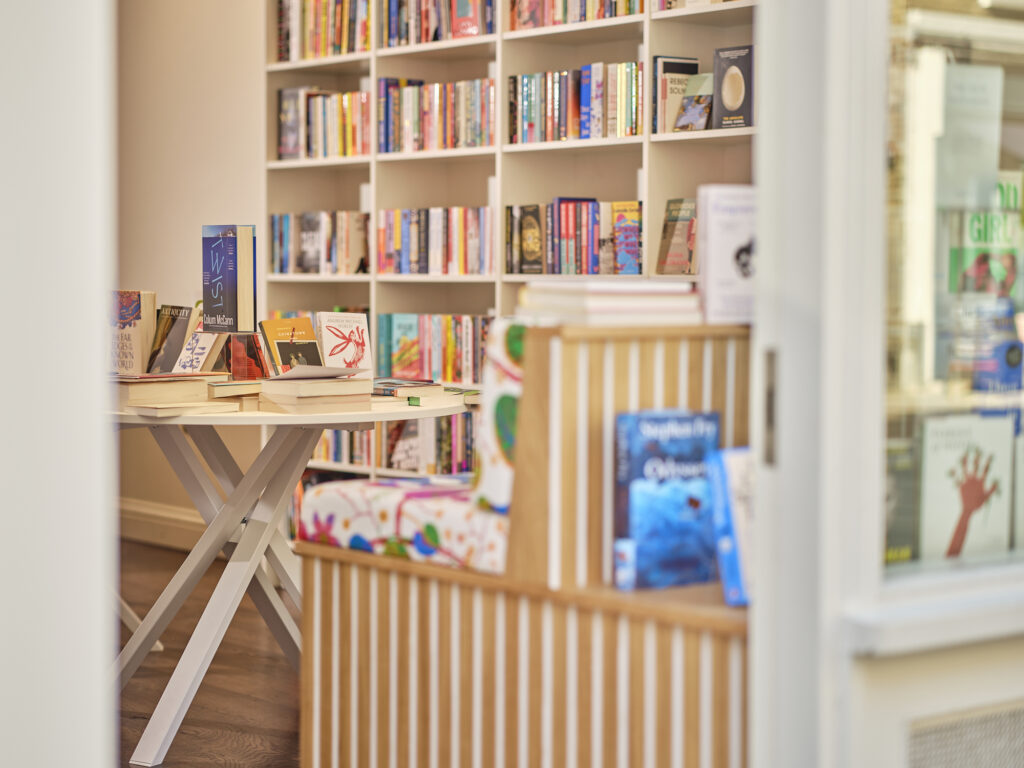
A visit to Veranda Books, a haven of translated fiction, spontaneous conversation and very personal book recommendations.
Words: Mark Riddaway Images: Orlando Gili
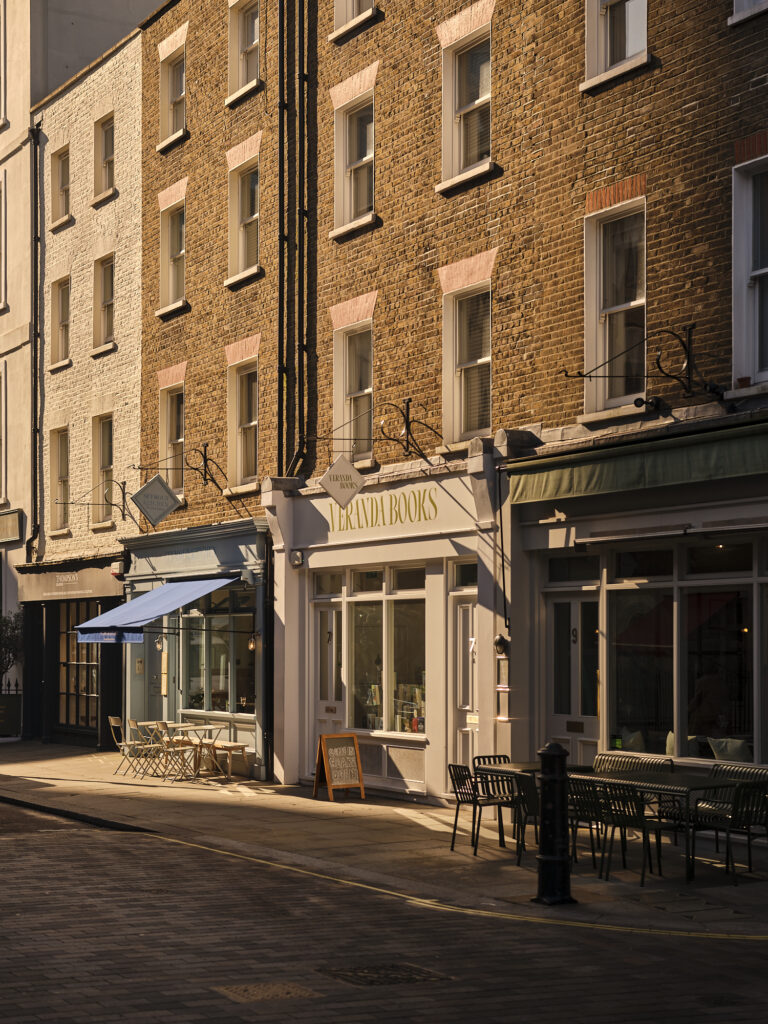
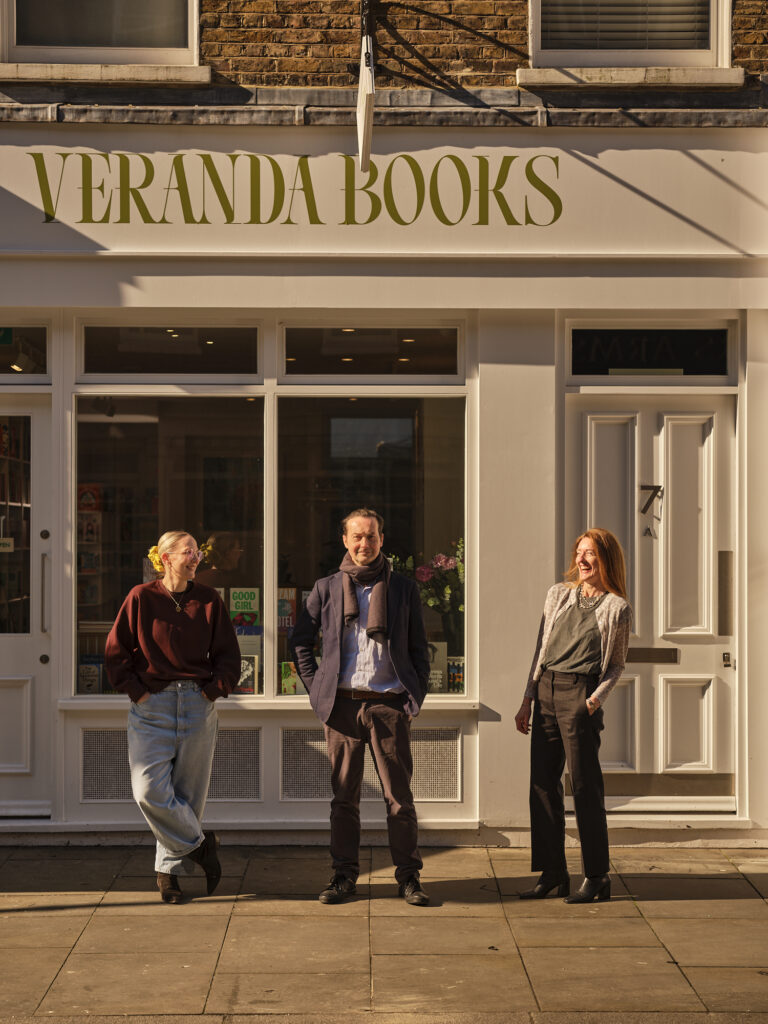
About half an hour. That’s how long this should take if handled efficiently. A quick look around the most bijou of bookshops, a tight 20-minute chat with the owners, then back home to a big pile of work that isn’t going to do itself. Thirty minutes, in and out. By the time I finally drag myself away, I’m deep into the second hour and a third is ambling jauntily round the corner. It’s an uncanny thing, the lip-loosening power of an independent bookshop. There aren’t many places where Londoners talk willingly to strangers – this isn’t some Lancashire village – but in here, a sunny room staffed by contagiously enthusiastic bibliophiles, it’s hard to keep those usual barriers up. “There really is something about the conversations a bookshop elicits,” says Leo Lucas, the shop’s co-owner. “I don’t know if it’s because people feel it’s a safe space or because there are all these ideas and thoughts contained within books which somehow seep out, but people come in and sort of bare their souls, don’t they?” His friend and business partner, Alison Henry, nods vigorously, even though she, like me, clearly has work to be getting on with.
“We’re very open to that,” she says. “We love talking to our customers. It’s actually the best thing about this job.” I never quite get to the soul-baring stage, but we do spend a long time gassing away about books. We talk about how the novels we read in our youth became anchored in our minds to the time and place we consumed them. We identify the best football autobiography of all time (Tony Cascarino’s, obviously). We debate whether Martin Amis was one of the great novelists (Leo’s view) or a bit of a prick (mine, although I’m open to the idea that he may have been both). Mostly, though, I get hit by a hail of recommendations while a small stack of suggested reads builds up beside me on the window seat.
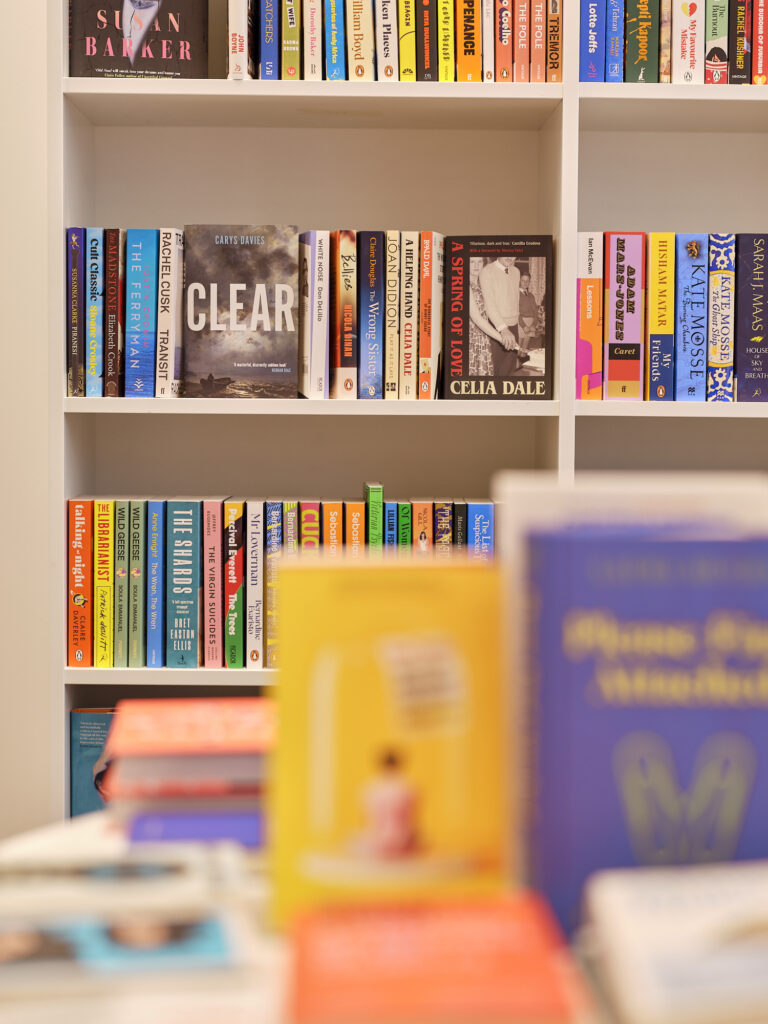
Those reading tips are how most conversations here start. And they are, in a way, the whole point of Veranda Books. Books are not a scarce or hard-to-find commodity. Quite the opposite, in fact; the problem comes with parsing the almost infinite possibilities. There are currently about 40 million books available on Amazon (most, but not all, of which weren’t written by AI). But unlike the digital world’s dead-eyed algorithms, a good bookshop will take your hand and guide you through that forest of options. An algorithm knows what you’ve read recently, but it doesn’t know how you’re feeling today. It knows what you liked in the past, but it can’t know the surprising things you’re destined to love in the future. It knows what’s big and popular and of the moment, but it won’t dig deep enough to dredge up any long-lost gems. A small, thoughtfully stocked bookshop run by passionate, knowledgeable people can do all that and more. “I’m making a number up, but 70 or 80 percent of what we sell is based on serendipity, on that sense of discovery you get from browsing or chatting,” says Leo. “And if you’re a regular reader, or even if you’re not a regular reader, I think the idea of being introduced to something that feels a bit surprising and different is really attractive.”
Here, every available book has been chosen for a reason, either because one of the team loves it or because, knowing their customers, they’re pretty sure that someone else will. As a result, the stock is essentially a distillation of their own personal pleasures and fascinations. The diversity comes from Alison, Leo and Emily Jefferson, the shop’s manager, being rapacious readers (“Emily and I have been competitive about how many books we’ve read this year,” says Leo) and each having a distinct set of inclinations. “Sometimes we overlap, but yes, we all have quite specific tastes, I think,” says Alison. “Emily has quite different tastes to me. Quite dark.” (This is, Emily insists, a result of her life being mercifully free of darkness.) There are plenty of customers who share Emily’s taste for the bleak and twisted, but most people come in seeking sanctuary from the twisted bleakness of the real world. “I think the world is not in a great place at the moment, and collectively we’re looking for an escape from that,” says Alison. To help (and I love this idea deeply), the non-fiction section downstairs is organised by psychic weight – grim subjects to the left, light and fluffy to the right. That’s not the shop’s only notable quirk. Other than a few recent releases, the fiction is almost entirely paperback, and even the week’s most popular books are laid out in very small quantities. “Neither of us really likes going into those shops that feel crowded, where everything is piled up,” explains Alison. “We
wanted it to be clean and inviting, and for that reason we don’t buy in bulk. We don’t have a stack of 30 of the new Sally Rooney – we’ll have a couple, and if they sell, we’ll get a few more.” Translated fiction – an obsession of both owners and a significant point of difference for the shop – takes up an entire wall. “One of the great things about translated books is that they’re almost self-selecting in terms of quality,” explains Alison. “It’s a huge mission to get a book translated and then sell it into a completely different market, so it will only happen if you’re a prize winner or your book is very well regarded in your own country. I also love that it transports you to a different place, a different country, a different culture.” From Seymour Place to Sierra Leone in the turn of a page. Like the famous bankruptcy in Hemingway’s The Sun Also Rises, the story of Veranda Books played out in two ways: gradually and then suddenly. It began in 1996 with two young employees at an advertising agency discussing one of the decade’s era-defining novels.
“Alison and I met almost 30 years ago working at an agency in Paddington,” says Leo. “I was reading The Secret History by Donna Tartt – still one of my all- time favourites – and I remember that being the subject of one of our very first conversations. We were always chatting about books.” The pair bonded over a shared love of reading, languages, travel and – as an extension of all three – translated fiction. At first, their pipedream was to abandon their jobs and become independent publishers. “I came across a small publisher called Pushkin Press and I really liked the idea,” says Alison. “We thought about setting something similar up. But it seemed like a lot of hard work for two people in their twenties with a big social life and no clue between them, so we shelved that and just carried on being friends.” Alison left the advertising industry, had children, retrained as a teacher, migrated to and returned from Hong Kong, experienced the soul-searching and ennui of the Covid lockdowns, then found herself pining for something different. Leo, whose first taste of bookselling had been an 18-month stint at Waterstones straight after university, had meanwhile rekindled his affection for the trade by taking a job at House of Hodge, a famous second-hand bookshop in north London. “Leo was telling me about his day, and it just sounded like such a happy, interesting life,” says Alison. “I said: ‘You know, we really should open a bookshop of our own.’ And he said: ‘Yeah, sure.’ A week later, I was taking a course on how to open a bookshop. And that was it really.” Alison’s tutor, in the kind of coincidence without which fiction couldn’t function, was Leo’s mid- 1990s store manager at the Watford branch of Waterstones.
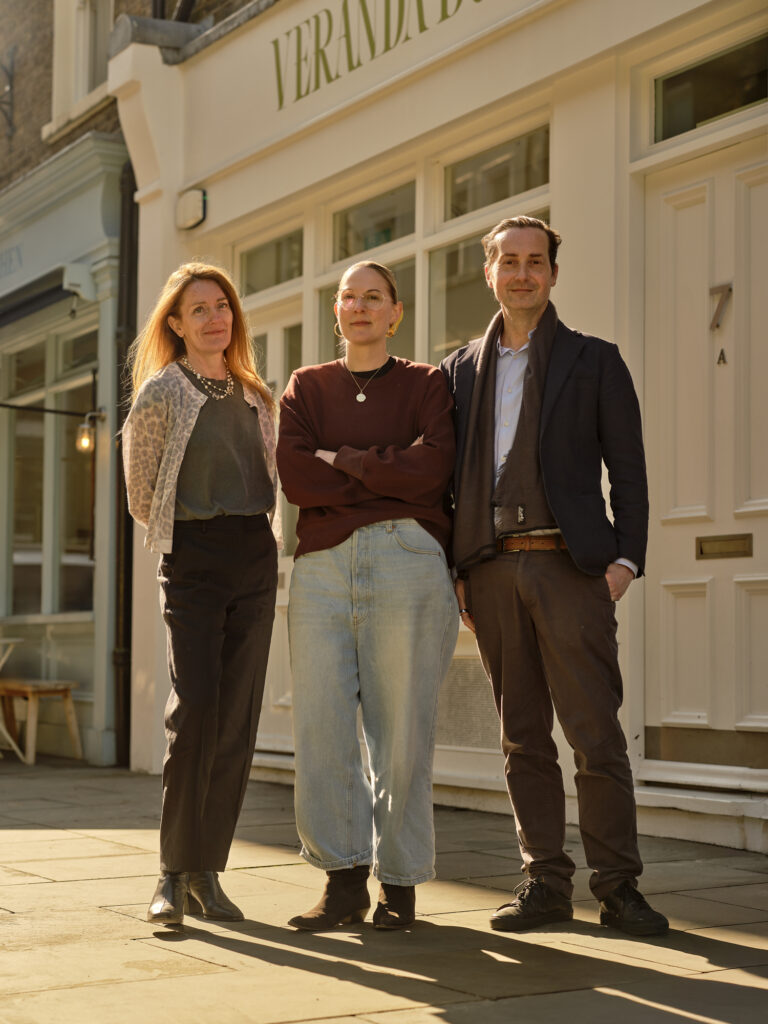
Veranda Books’ presence in Marylebone comes from the sense of serendipitous discovery that informs so many of the purchases in their shop. “I think this place found us,” says Alison. “We were looking around Golborne Road for a long time. I had my heart set on being up there, but it just wasn’t happening. We decided to come for a day out around here.” Leo is friends with Suzannah Crabb, the fashion designer whose lovely New Quebec Street boutique is part of the local landscape, and she helped introduce them to the neighbourhood. They knew they’d found their perfect home as soon as they were shown the vacant shop. “The space, the setting: this was always the place for us.” Whether right now is a propitious moment to open an independent bookshop is an open question. A positive sign is that sales of physical books have remained buoyant despite – and perhaps in reaction to – the technological developments that are rapidly reshaping our world. “There’s a huge disillusionment with digital media and a return towards analogue in general, as a broader societal trend,” says Leo. “When you read a book, it’s a different experience for your brain. When we’re online, we’re constantly on autopilot, constantly scrolling, never fully engaged. Whereas with a book, you have to slow down.” And yet, despite this healthy demand, high street booksellers are closing at an alarming rate, choked out by the Vulcan death grip of online retail. The good news is that people who love bookshops tend to love them deeply. “It’s quite sensory. Lots of people who come in here, the first thing they say is: ‘It smells amazing – it smells of books.’ There’s just something about the smell and feel that really appeals to some people.” So, in the right location, with the right offering, independents are still able to thrive.
Thankfully, they’re not reliant solely on old duffers like me. “What’s interesting is that a lot of the renaissance in books is driven by younger readers, particularly young women,” says Leo. “It’s become quite buzzy and fashionable.” There is, adds Alison, real substance behind the buzz: “They really are reading and engaging, and I think it’s amazing.” She cites the example of Rachel Cusk, a serious literary novelist and exceptional prose stylist, who has developed a huge following among young women on TikTok, “even though her books are about women of a certain age whose marriages are falling apart”. Alison uses youthful online communities as a reservoir of ideas, pairing them with more traditional sources such as newspaper reviews and the promptings of industry reps. “Dua Lipa has an amazing blog called Service95 which has a book club within it. She’s very into translated fiction – probably partly because she’s Kosovan and she likes to promote books from there, but she’s also just a very well- travelled, very intelligent woman. Kaia Gerber, the daughter of Cindy Crawford, also has an amazing book club called Library Science, where she recommends great books. We’re not huge on TikTok. or Instagram but we do use them to see what’s being talked about.”
So, like the shop’s non-fiction section, there’s a bit of fear on one side and plenty of hope lined up on the other. What’s clear is that if we don’t visit the bookshops we have, they’ll one day all be gone – and that would be a tragedy. Leo sums it up perfectly: “If you have a library in your local area and you find out it’s closing, even if you don’t use it yourself you should still sign that petition. Because do we want to live in a society that doesn’t have libraries? Personally, I don’t. If we start losing those common cultural touch points, that’s the first sign of a society in terminal decline, in my opinion. I think people feel the same way about bookshops. The comment we continuously had from locals for the first month we were open was: ‘I’m so glad it’s not just another cafe.’ Don’t get me wrong: I love cafes, I love coffee and croissants, but as a society we don’t have a fundamental need for more cafes, do we? But we do need bookshops. We really do.”