
The co-founder of the Chiltern Street atelier on continuing his father’s design legacy, dressing Paapa Essiedu, and how the suit is being rebooted.
Interview: Lauren Bravo
Portrait: Marsy Hild
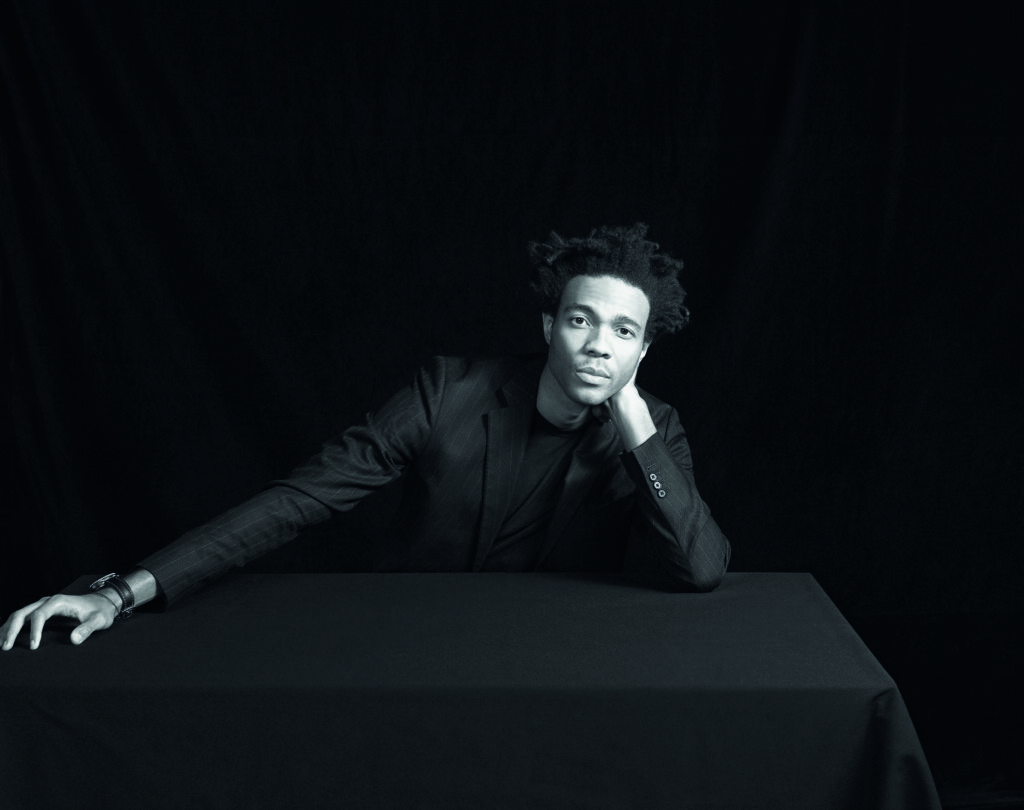
Q: Casely-Hayford is a family business, and you come from a pretty incredible family – the son of pioneering designer Joe Casely-Hayford. What was it like growing up in such a creative household?
My dad met my mum, Maria, at Central Saint Martins when they were 19, and they worked together until he passed away in 2019. My sister and I spent a lot of time in their studios as kids, surrounded by clothes, going to runway shows – it was a pretty insane childhood, but to us it was normality. One time Princess Diana turned up to my dad’s London Fashion Week show, and my sister and I got bumped from the front row to the second. That was an eye-opener.
Q: Last year was a big one for your family, with your father’s work celebrated in The Missing Thread exhibition at Somerset House and commemorated with a posthumous Special Recognition Award from the British Fashion Council after he passed away in 2019. How does it feel to be continuing his legacy?
Standing in front of that many people at the Royal Albert Hall was pretty nerve-wracking, but picking up the award on his behalf was a real life-making moment. It’s been a really lovely process for me, and a way to connect with a lot of the ideas my dad built his business around. We are a family business first and foremost, and I still work with my mum every day. She was integral in putting together our contribution to The Missing Thread exhibition, a retrospective of my dad’s work since the mid 80s, featuring a lot of pieces that haven’t seen the light of day in several decades. I feel more like a torchbearer, carrying on this family legacy to the next generation. It’s certainly not a lonely journey.
Q: You were only 22 when you and he created the Casely-Hayford label together. How did your styles influence each other?
There’s always the assumption that I brought the youthful element to the table, but actually it was the other way round! I was more classic, and my dad was always the one pushing the boundaries. He was incredibly engaged with culture, always willing to learn and unlearn. The brand is about duality; it’s a concept that has resonated with my family for generations. My great[1]grandfather [eminent lawyer and journalist JE Casely Hayford] would wear traditional kente cloth when he studied at Cambridge, then he would go back to Ghana and wear Savile Row suits. That idea of double consciousness runs through our brand, and also through our family history.
Q: Your family has founded a new scholarship with the BFC to support Black or mixed-heritage design students, and you’ve also become a mentor for the Paul Smith Foundation. What do you hope it will do for the designers of tomorrow?
There are a lot of gaps in the industry. So much untapped potential, particularly in this country; so many people and brands that are not being given the opportunity to do the amazing things I know they’re capable of. It’s very hard for people to break through the cracks unless you know certain people, or you’ve gone to the right college – it’s an elitist industry and there are so many barriers to entry. I’m very privileged in that my path was built for me by my parents, so I’ve had it pretty easy. But I’d like to do what I can to help in levelling the playing field and opening a few doors that have been shut for some time.
Q: Sustainability is another crucial conversation in fashion just now. In the age of ultra-fast fashion, how do we slam on the brakes?
It’s such a complicated subject, because there’s no blanket answer. There’s a lot of waste in terms of excess stock, both on the high street and at a luxury level. You’re second-guessing your customer and committing to these huge orders, and then there are piles and piles of clothes at the end of each season and everything is on sale all the time. It’s the antithesis of what we do. A lot of our pieces are made to order, we don’t make much of each style, we work with small artisans, and when we need more, we make more. I’ve always struggled with the word ‘fashion’ because fashion by definition is transient. We’ve always tried to position ourselves in a different arena, where the clothes have a greater currency. Fast fashion is propelled by this idea that clothing can just be disposable, whereas a couple of times a week we get someone who’ll come into the shop and say, ‘I still have something from your dad’s collection from 30 years ago.’ People just hold on to them. It’s a different mindset.
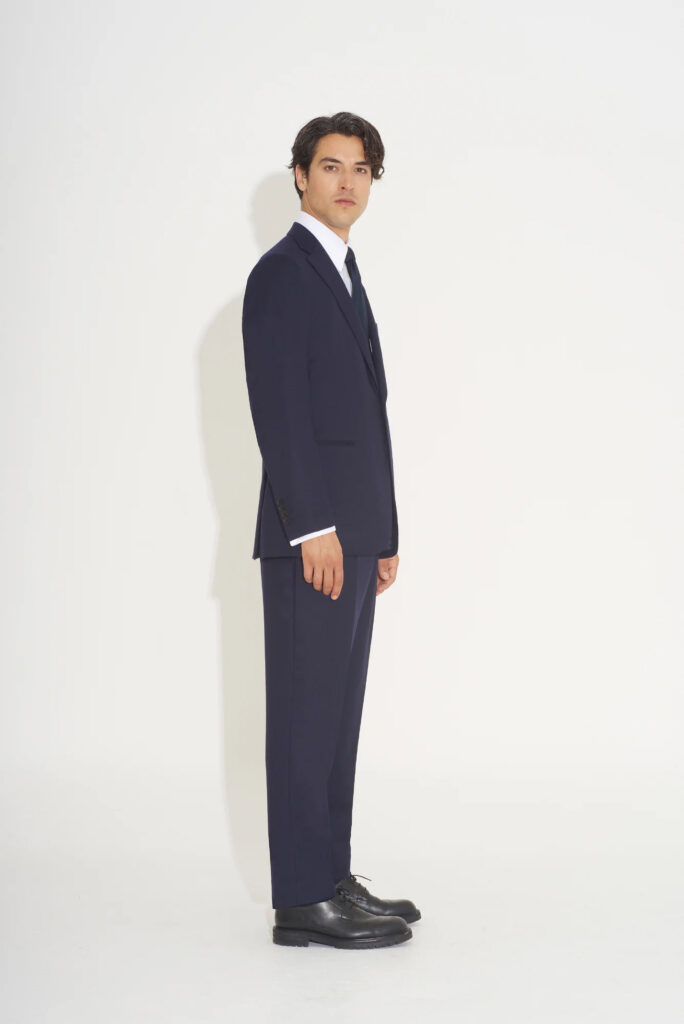
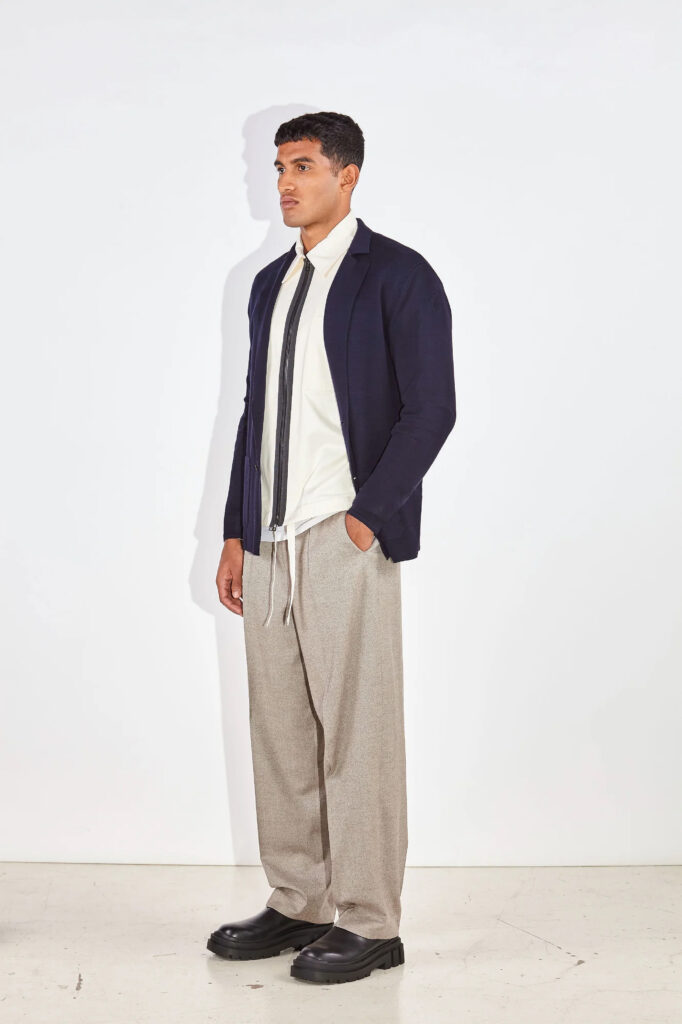
Q: You’ve called the suit fashion’s ‘comeback kid’. What’s the freshest way to wear one now?
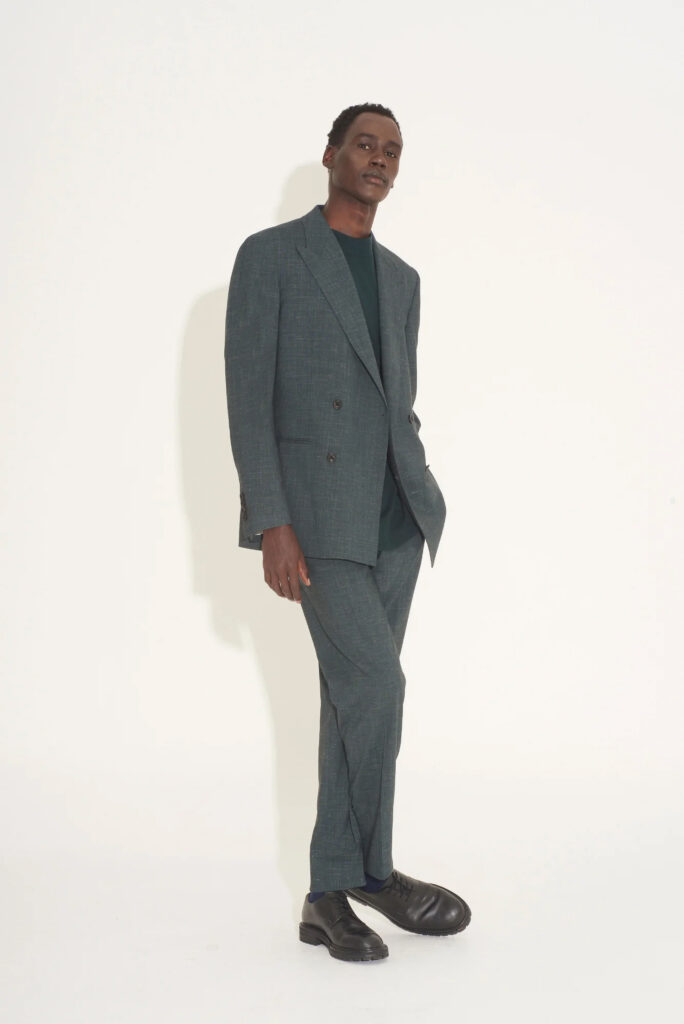
The tailoring world has changed dramatically in recent years. A suit used to be a garment that existed separately to the rest of your wardrobe, worn for business or for formal occasions. But it’s been adopted by a new demographic who have flipped it on its head and are wearing it in an anarchic kind of way. We’ve had a lot of clients who’d never worn a suit in their life, now choosing to wear one but in a very relaxed way, with a t-shirt and trainers; wide, louche silhouettes. It’s the antithesis of a traditional, structured suit. I think there is an association with tailoring houses that ‘heritage’ means harking back to the past, but classic doesn’t necessarily mean standing still.
Q: What is it about the power of a sharp suit? Does good tailoring affect us psychologically?
Very much so. A lot of people liken a well-cut suit to body armour. I think the confidence comes from something fitting you so well, and the fact that you’re part of the design process; it’s a collaboration between tailoring house and client. Since we opened our store in 2018, we’ve been able to engage with our clients on a much deeper level than we did when we used to sell wholesale. It’s been a really interesting process for us in terms of listening to people and building our brand DNA – and, in a sense, problem solving. I know it’s an odd way to approach design, but we think about what our clients actually need in their wardrobes, given how lifestyles have changed and how people operate now. That’s how we’re always trying to evolve.
Q: You’ve dressed an incredible rollcall of stars for the red carpet. Who have been your career defining clients?
We asked the actor Paapa Essiedu to host the Special Recognition Award and he wore archive Joe Casely-Hayford from 1980, tweaked so that it fit him perfectly. It was wonderful to see him wearing something from several decades ago, looking so modern, because I think that proves the point about longevity. We also have a strong connection with the music industry, and it’s nice that we’ve often dressed artists at pivotal moments of their careers, such as James Blake winning his first Grammy or Sam Smith getting their first Brit Award. But it’s not necessarily about people being famous. On a personal level, I get just as much joy – if not more – from cutting someone a suit for their wedding day. It means that we’re a small part of the most important day of someone’s life, and that really resonates with me.
Q: How is life on Chiltern Street right now?
It’s very buzzy. Whenever the sun comes out, all these people seem to emerge from somewhere! Oliver Spencer has joined us recently which is a nice addition, and we currently have our second collaboration with Sunspel in store, which was completely born out of us being Chiltern Street neighbours. I bumped into the guys a lot and it felt like a natural synergy, combining Sunspel’s cloth with our tailoring. It feeds into our idea of ‘soft’ tailoring being part of your relaxed, everyday wardrobe.
Q: Your wife, interior designer Sophie Ashby, designed your Chiltern Street store. Does it feel like an extension of your home?
Yes, we pretty much designed it around that idea. Often when I go into luxury stores, they’re quite austere and intimidating. We just wanted to create the warmest environment we could, and we came to the conclusion that emulating our apartment was the natural way to make someone feel relaxed. So, my wife set about creating this wonderful little world. The store is very small, but the intimacy is part of its charm. And everything is for sale – the furniture, the artwork, not just the clothing. We once had a client – who wasn’t even a client yet – come in, sit downstairs in the fitting room and read a book for half an hour. Then he left without buying anything. It was a wonderful moment.
CASELY-HAYFORD
3 Chiltern Street,
W1U 7PB
casely-hayford.com